
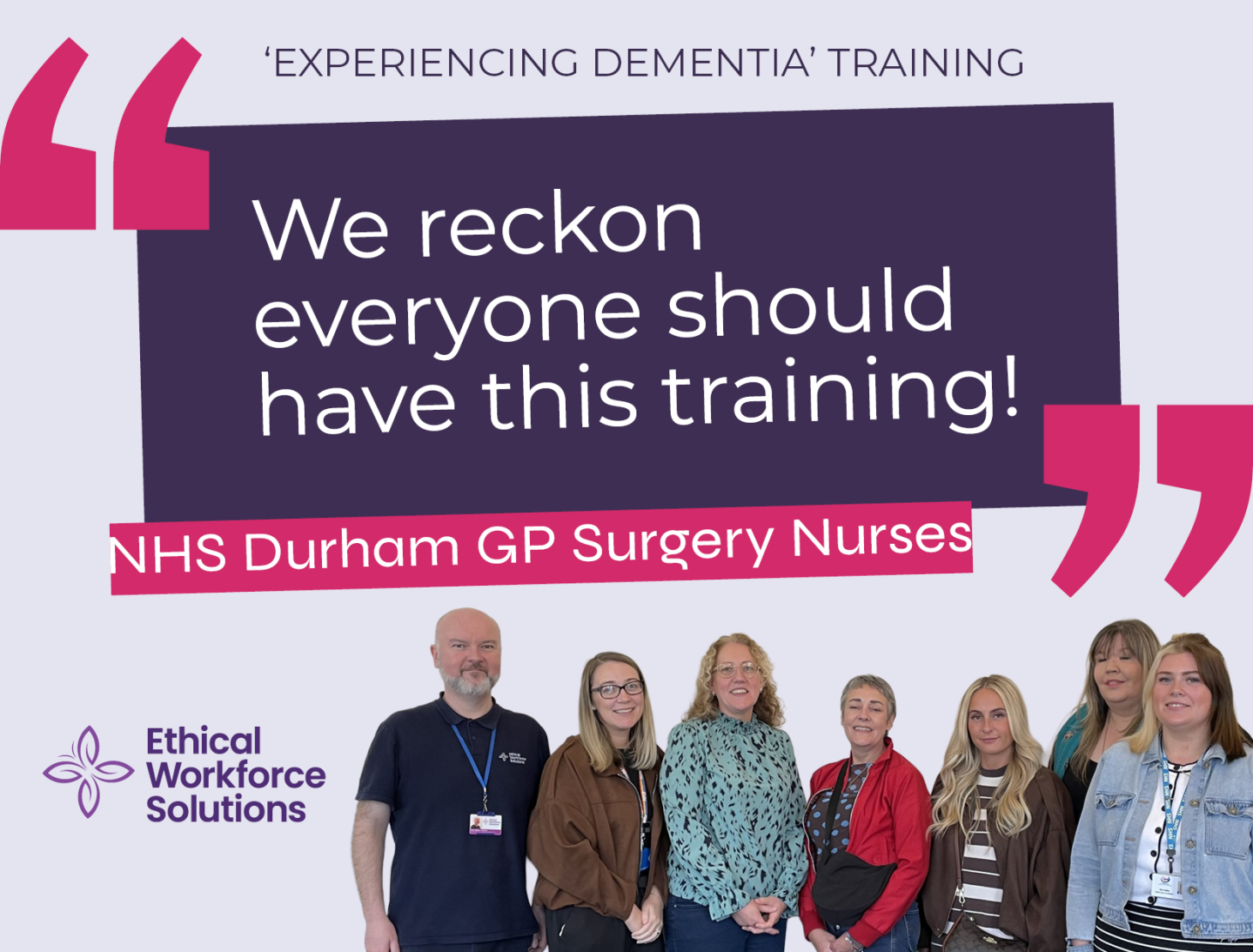
Experiencing Dementia Training: Why Virtual Reality and Sensory Equipment Work
When people talk about dementia training, they often focus on facts, symptoms and communication techniques. Those topics matter. But for many care teams, the real breakthrough comes when training moves beyond discussion and into experience.
That is where experiential training can make a powerful difference. By using virtual reality and sensory depriving equipment such as goggles, staff can begin to understand dementia in a more immediate and memorable way. Instead of only hearing about confusion, sensory change or disorientation, they can experience a simulated version of it for themselves.
Why experience matters in dementia learning
Understanding dementia is not just about recognising medical or behavioural signs. It is also about appreciating how a person may feel when familiar routines, sounds and surroundings become difficult to interpret.
Traditional classroom learning can explain this well, but it may not always land in a way that changes day to day behaviour. Experiential training creates a different kind of learning moment. It helps staff connect knowledge with emotion, and that can make the learning stick.
For care home managers, carers and team leaders, that can be especially useful because the aim is not simply to know more. The aim is to provide more thoughtful, person centred support.
How virtual reality supports understanding dementia
Virtual reality can place the learner in a carefully designed scenario that mimics some of the challenges associated with dementia related sensory changes. Depending on the training design, that might include visual distortion, reduced clarity, distracting sounds or a sense of disorientation.
The value of this approach is not that it recreates dementia exactly. Rather, it gives staff a safe way to explore what it can feel like when the world becomes harder to read.
That kind of insight can help teams think differently about common care situations, such as:
- why a person may hesitate in a busy corridor
- how poor lighting can increase anxiety
- why instructions may need to be simpler and slower
- how noise, clutter or rushed communication can affect wellbeing
Why sensory depriving equipment makes the learning stronger
Equipment such as goggles can be a useful part of this process because it limits familiar visual cues and creates a more challenging sensory environment. When used carefully and appropriately, sensory depriving equipment can help learners notice how much they rely on clear sight, stable surroundings and consistent cues to feel confident.
That is one reason this type of training can be so effective. It does not only tell staff that dementia can affect perception. It helps them feel the impact of reduced sensory input in a controlled learning setting.
This can lead to practical reflection, such as:
- how to reduce avoidable background noise
- why it helps to approach calmly and from the front where possible
- how clear signs and uncluttered spaces support independence
- when to slow down and give a person more time to process information
Practical steps for care homes to make the most of the training
The most effective dementia training is not the one that feels impressive for a moment and is then forgotten. It is the one that leads to real changes in practice. Care homes can get more value from experiential learning by following a few simple steps.
1. Prepare the team before the session
Staff are more likely to learn well if they know the purpose of the training. Explain that the session is designed to build understanding, encourage empathy and support better care practice.
2. Create space for reflection afterwards
The discussion after the experience is often where the learning really happens. Ask staff what felt difficult, what surprised them and what they would do differently in a real care situation.
3. Link the learning to daily routines
Encourage teams to think about the practical moments that matter most, such as mealtimes, personal care, walking support, transitions between activities and responding to distress.
4. Turn insights into small actions
It is often the small changes that make the biggest difference. That might mean reducing noise during handover, reviewing signage, taking a calmer approach at peak times or allowing extra time for communication.
5. Reinforce the message over time
One session can start the conversation, but regular follow up helps keep dementia awareness active across the team. Short refreshers, team discussions and observation in practice can all support this.
A more human way to build dementia understanding
Virtual reality and sensory depriving equipment can make experiential training feel more immediate, but the real strength of the approach is what happens next. Staff often leave with a more human understanding of the person behind the diagnosis.
That shift can influence tone of voice, patience, pacing and confidence. It can also help teams recognise that behaviour is often communication, and that the environment matters.
For care home managers and team leaders, this can be a practical way to support culture as well as competence.
If you are looking for training that helps your team build understanding dementia in a clear, memorable and practical way, Ethical Workforce Solutions can help. Visit the website to get in touch and find out more.
Our Accreditations





Accredited Care & Training.