
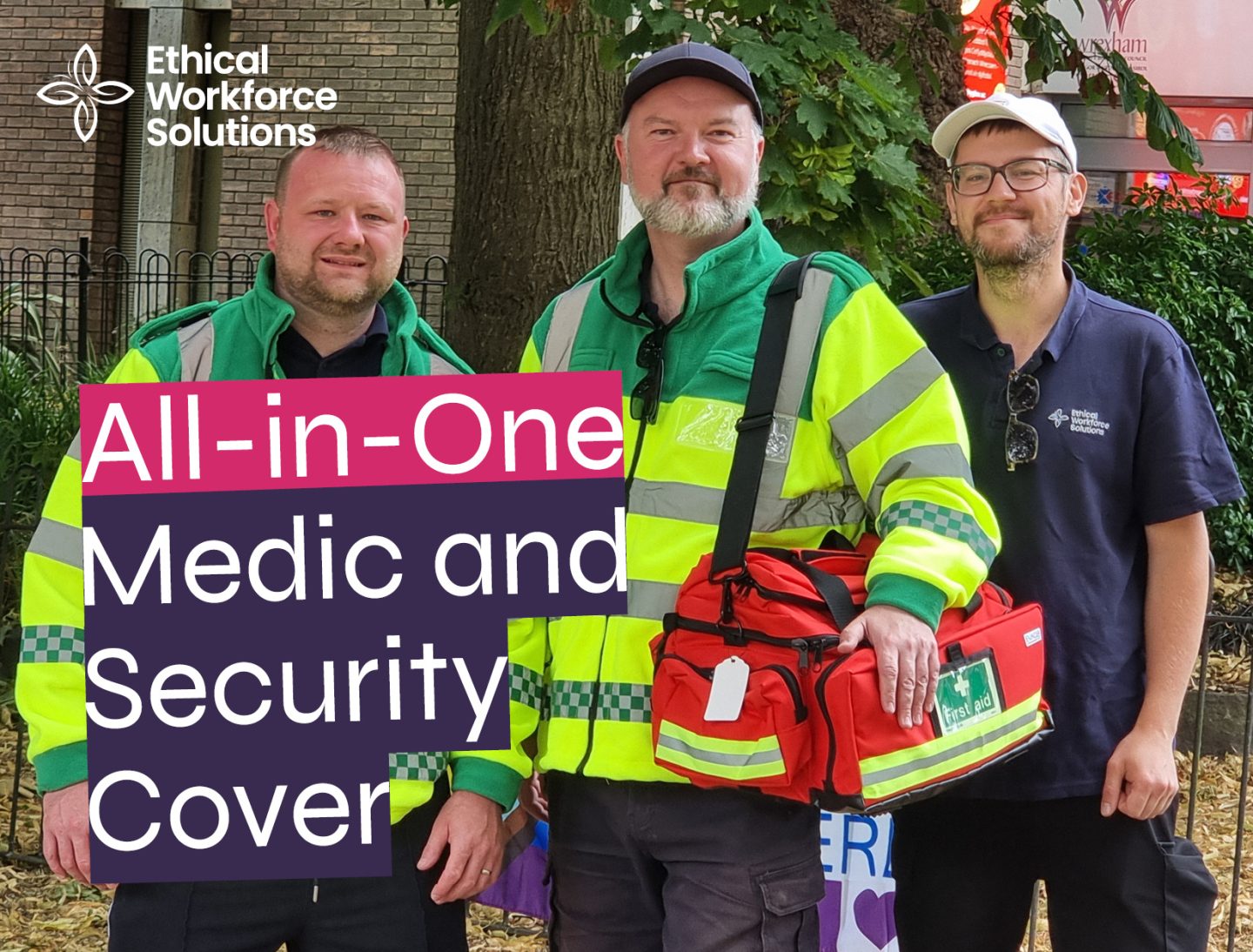
Event cover for concerts and festivals: the mistakes organisers often miss
When people talk about event safety, the conversation often starts in the wrong place. Too many organisers begin with numbers, uniforms or short term fixes, rather than asking a simpler question: what does this event actually need in order to run safely?
That mistake matters. A concert in a city venue, a local festival, a community fun day and an outdoor music event may all need medic cover and security cover, but not in the same way. The crowd profile, the site layout, the likely pressure points and the level of public interaction all change the picture. Good planning is not about copying what worked elsewhere. It is about matching the cover to the event.
Common misconception 1 – security and medical cover do the same job
One of the most common misunderstandings is that security staff can simply step in whenever there is a medical issue, or that medics can deal with crowd control if needed. In reality, these are different roles with different priorities.
Security cover is there to help manage access, protect people and property, support crowd movement and respond to incidents in line with the event plan. Medic cover is focused on assessment, first response and treatment of injuries or illnesses within their scope of practice. Mixing those responsibilities can create confusion, delay and unnecessary risk.
For concerts and festivals, that distinction is especially important. A busy entrance, a sudden weather change or a distressed attendee may require both services, but not in the same way. Clear roles and communication help everyone respond properly.
Common misconception 2 – any trained person can fill any gap
Another frequent error is to assume that if someone is experienced, they can cover any role on the day. That can lead to well meaning but unsuitable staffing decisions. Event cover should be planned with competence, role clarity and the needs of the event in mind.
This is where professional qualifications and relevant experience matter. SIA licensed security staff are commonly required for many types of security work, while FREC4 is a respected first response medical qualification used in event and pre hospital settings. The point is not to use qualification names as labels for their own sake, but to make sure the right people are in the right roles for the environment they are working in.
Common misconception 3 – smaller events do not need proper planning
Small does not automatically mean simple. A local music event, street festival or private celebration can still have crowded entrances, alcohol, moving vehicles, changing weather or a mix of ages and abilities. Even where the event feels informal, the duty to think carefully about safety does not disappear.
Many organisers discover too late that a relaxed atmosphere needs structured support. A clear event plan should consider communication, welfare points, emergency access, escalation routes and how medic cover and security cover will work together if something unexpected happens.
Common misconception 4 – cover can be left until the last minute
Event planning often runs into problems when cover is treated as a final booking rather than part of the setup process. By the time the site map is finished, the ticket sales are live and suppliers are confirmed, there is often little room to think through response arrangements properly.
Early planning helps identify where cover is needed, how many personnel may be appropriate and what type of support is required. It also gives organisers time to brief teams clearly, share site information and make sure the event plan is realistic. Last minute decisions can be expensive in every sense.
What safe event cover usually needs to consider
While every event is different, a sensible approach usually includes:
Clear boundaries between medic cover and security cover
Appropriate use of SIA licensed security staff where needed
Medical responders with the right level of event experience, such as FREC4 where suitable
A shared understanding of the venue layout, crowd flows and access points
Communication routes for incidents, escalation and handover
Realistic planning for weather, welfare and busy periods
For concerts and festivals, these basics make a noticeable difference. They help support safe, compliant events without overcomplicating the planning process.
A more practical way to think about event cover
Instead of asking, “What can we get away with?”, ask, “What would help this event run well and respond properly if something goes wrong?” That simple shift often leads to better decisions.
It may mean separating the medical and security conversations early. It may mean checking whether the event needs SIA security support, event medics, or both. It may also mean reviewing how staff will be briefed so they understand the site, the audience and the likely pressure points before anyone arrives.
This is the difference between reactive cover and considered planning. The first can look adequate until it is tested. The second is built to support the event from the start.
How Ethical Workforce Solutions can help
Ethical Workforce Solutions is a UK training and consultancy provider that supports organisations with practical, people focused planning. If you are arranging concerts, festivals or other live events and want help thinking through medic cover, security cover, SIA requirements or FREC4 considerations, we can help you review the options and decide what makes sense for your event.
To find out more, check out the website at ethicalworkforcesolutions.co.uk.
Our Accreditations

Accredited Care & Training.
Find out more about our services
Our friendly staff are always available to help you with your needs. If you need assistance or have questions, please get in touch with us for more information.