
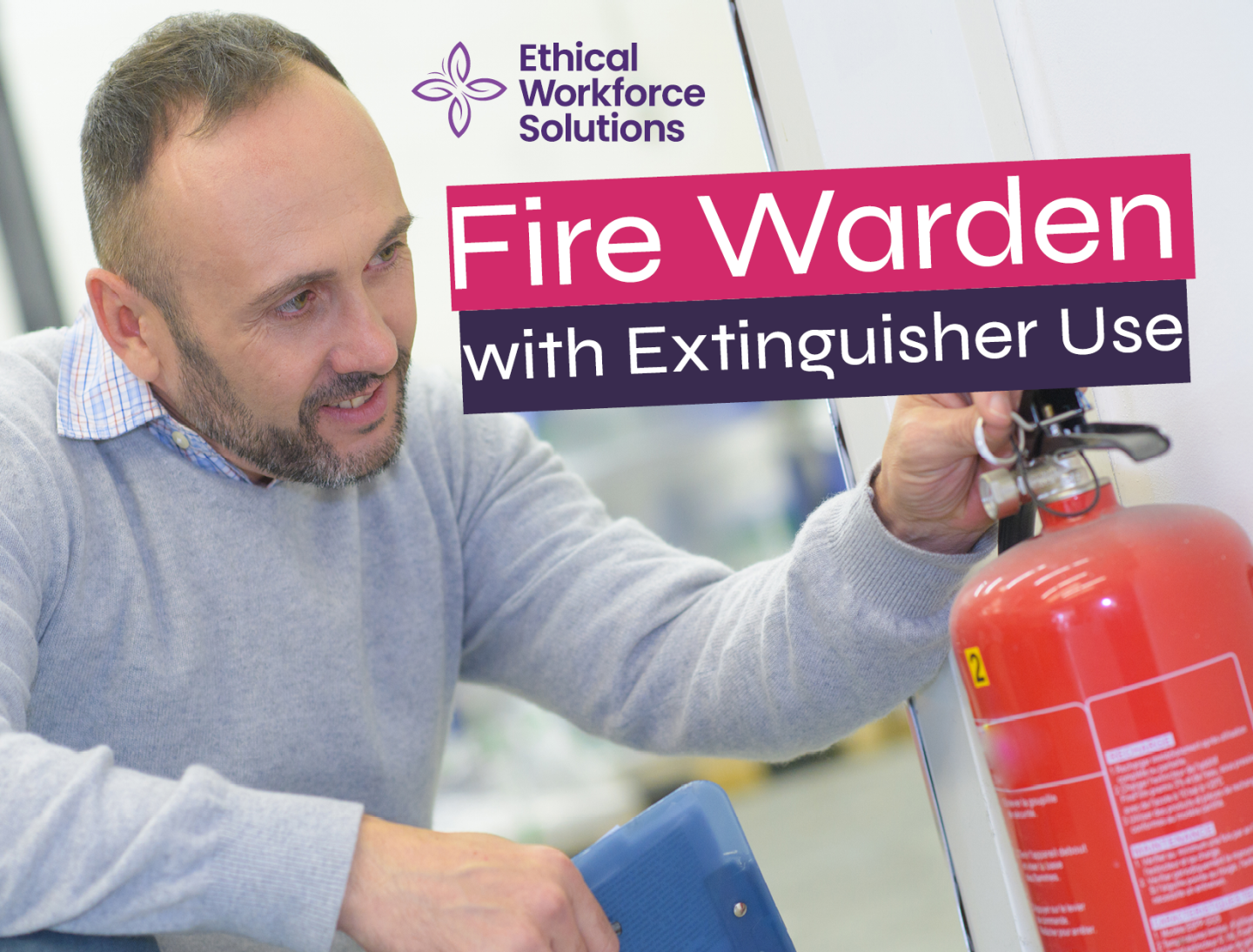
Fire Warden Training FAQs for Care and Children’s Services Teams
Fire Warden Training FAQs: What Care and Children’s Services Teams Often Ask
When people hear the phrase fire warden training, they often think of alarms, extinguishers and evacuation drills. Those are all part of it, but the role is broader than that. In care settings and children’s services, a fire warden may be expected to stay calm, communicate clearly and help others move to safety when time matters most.
If you are a care manager or work in children’s services, you may be asking practical questions such as: Who needs this training? What does a fire warden actually do? How does it help with day to day fire safety? Below, we answer some of the most common questions in a simple, useful way.
What is fire warden training?
Fire warden training helps staff understand what to do in the event of fire, how to support an orderly evacuation and how to recognise their responsibilities before, during and after an incident. It is designed to build confidence, so that people know how to respond rather than having to guess under pressure.
In practice, the training usually covers the role of the fire warden, the basics of fire safety procedures, alarm response, evacuation support and the safe use of extinguishers where appropriate.
Who should be a fire warden?
There is no single answer that suits every organisation. In many workplaces, fire wardens are appointed from staff who are reliable, observant and able to stay calm in a fast moving situation. In care and children’s services, this may include team members who are already used to supporting others, managing routines and communicating clearly.
The important point is that the person understands the setting they work in. A fire warder in a residential care home may need different knowledge and confidence than someone supporting children in a nursery or after school environment.
What does a fire warden actually do?
A fire warden’s role can vary depending on the organisation, but it often includes:
– checking that escape routes are clear
– helping people leave the building safely
– supporting vulnerable individuals during evacuation
– understanding fire alarm procedures
– reporting fire safety concerns
– knowing when it is not safe to attempt to tackle a fire
In some workplaces, fire wardens may also help with drills and regular checks. The aim is not to replace emergency services, but to support a safe and organised response until help arrives.
Why is fire warden training especially useful in care and children’s services?
Care and children’s services settings often involve people who may need extra reassurance, assistance or time during evacuation. That can include older adults, people with mobility needs, babies, young children or people who become distressed in emergencies. In these environments, fire safety is not only about procedure. It is also about people.
Training helps staff think ahead. For example, a fire warden may need to consider how to move people away from risk while keeping communication simple and calm. This is why a generic approach is often not enough. Good training reflects the realities of the setting.
Will the training cover using extinguishers?
Many people want to know whether they will learn about using extinguishers. The answer depends on the course, but it is common for fire warden training to include guidance on extinguisher types, when they may be used and when staff should leave fire fighting to trained professionals.
The key message is safety first. Knowing how extinguishers work can be helpful, but no one should feel pressured to put themselves at risk. Training should always reinforce what to do in the event of fire and when evacuation is the safest option.
What should staff do in the event of fire?
This is one of the most important questions. While exact procedures will depend on the building and your organisation’s policy, the usual priorities are to raise the alarm, support evacuation, follow local procedures and stay alert to the safety of people around you.
Fire warden training helps staff understand these steps before an emergency happens. That preparation can make a significant difference when every second counts.
How often should fire safety training be refreshed?
Many organisations choose to refresh training regularly, especially where staff turnover is high or the environment changes. In care and children’s services, this can be particularly important because staffing, resident needs and building use may all change over time.
Refreshing training helps keep knowledge current and gives people the chance to revisit evacuation procedures, safe communication and the practical reality of fire safety in their workplace.
What should I look for in a fire warden course?
Look for training that is clear, relevant to your environment and easy for staff to apply. The best courses do more than explain theory. They help people understand their responsibilities and feel confident about responding in a calm, organised way.
If you lead a care service or work in children’s services, it is worth choosing training that recognises the challenges of your setting. That way, staff can learn in a way that feels realistic and useful.
Ready to improve fire safety in your team?
Fire warden training can give staff the confidence to respond well, support evacuation and take fire safety seriously every day, not just during drills. If you would like a practical overview for your organisation, check out the website and see how Ethical Workforce Solutions can support your team.
Our Accreditations






Accredited Care & Training.
Find out more about our services
Our friendly staff are always available to help you with your needs. If you need assistance or have questions, please get in touch with us for more information.